Stay Focused on the Road Ahead

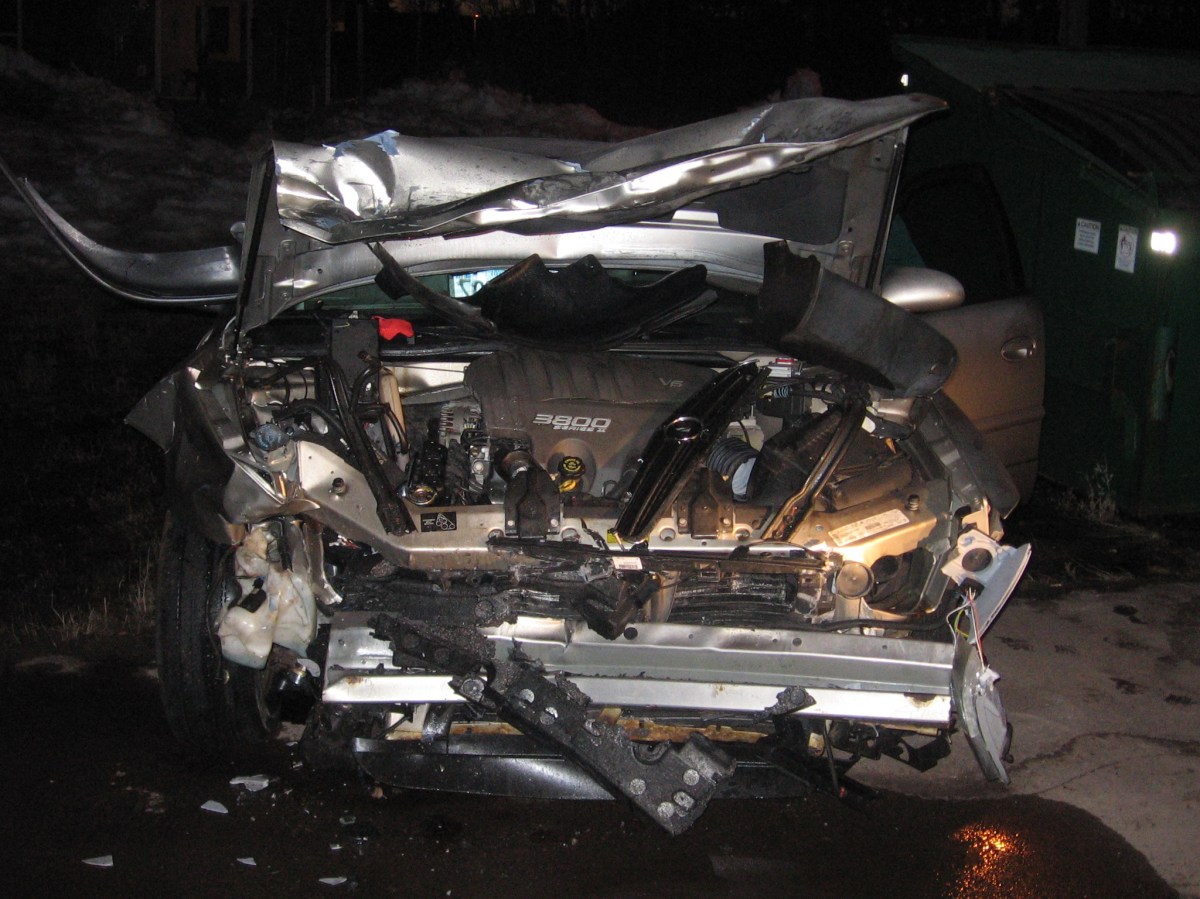
In March of 2010, an SUV crossed the center line and hit my car head on.  The deputy that responded told me that when he arrived, he thought for sure there would be a fatality at the scene.  He was shocked when bystanders directed him to me, the driver of the vehicle, standing on the side of the road.

Over the course of the next year, driving became more and more difficult.  The anxiety became paralyzing.  The once simple act of driving a few miles on city streets to and from work was now filled with fret and fear.  I would make tentative plans with friends—with the option to cancel if it happened to snow, or if I just couldn’t bring myself to get in the car that day.

I knew I needed to talk to someone.  I couldn’t live my life with this level of fear and anxiety.  My job at the time required me to drive two and three hours to other work locations.  I feared I could lose my job if something didn’t change.  I decided to seek out a counselor who could help

The counselor described what my anxious thoughts were doing in my brain.  As I continued to tell myself, “driving is dangerous “someone else could hit me,” “I could crash.” those thoughts were creating a well warn path in my brain.  Every time I repeated those thoughts the rut became deeper and deeper until my brain had trouble getting out of the rut.  As long as I continued this pattern of thinking my brain was going to stay in that nice deep rut I had created. 

In order to break the habit, I was going to have to change my thought pattern.  The counselor gave me an assignment.  Next time I was driving and feeling anxious I needed to change my “default” thought–so I chose a phrase I could repeat to myself that I thought would help.  The counselor also asked me to note what I was doing and thinking at the time that I was feeling anxious. 

It didn’t take long before I had an opportunity to try my new skills on a three-hour drive for work.  I tried my default phrase and initially it didn’t seem to help.  However, the more I tried it and the better I got at shifting the dialogue in my brain—the less anxious I became. 

When we drive, we look out at the road ahead, but on this trip, I realized I had developed a habit of watching the oncoming car.  In fact, I was focusing on the front tires of the other car—as if I was waiting, almost expecting, that it would eventually cross the center line.  Once I became aware of this habit, I redirected my gaze back to the road and slowly, over time, my habit changed, and more anxiety subsided.  Mile by mile, I made my way to my destination using my tools to keep my focus on the road ahead.

My counselor pointed out to me that I had created my own myth.  I believed that driving after my accident was more dangerous than it had been before my accident.  In reality, I was still the same safe driver I had always been, and I had always been at the mercy of other drivers.  Realizing this fact wasn’t a comfort at first, but then I realized—what was in my control before the accident was still in my control after the accident.  I was still a safe driver.  I still wore my seatbelt.  I kept my car in good working condition.  I was still attentive and proactive when I drove.  I could choose not to drive in bad weather conditions.  I could choose to use all the tools I had learned to keep my anxiety at bay so I could stay a focused and confident driver.  

Ten years after my accident, I still have lingering issues with driving.  I am not crazy about the freeway (although I routinely drive it).  I’m not a fan of heavy traffic, but I don’t live in a big city.  Adverse weather (snow, fog, etc.) usually gives me an abundance of caution (and stress)—not because I don’t trust myself to drive safely, but because I question other driver’s decisions to drive safely.  I continue to manage my anxiety with the same tools I learned from that counseling session more than a decade ago. 

So why write about this now?

In the midst of COVID-19 I see so many people wrestling with the anxiety of isolation and an uncertain future.  I realized that the same lessons that I learned to manage my anxiety around driving may be useful to others during this time.  Please note that I am not a licensed counselor or a mental health professional—just sharing some things I hope will be helpful.

There are three lessons I learned: 1) stay out of the ruts, 2) focus on the road ahead, and 3) focus on what you can control.

Stay Out of the Ruts

Being informed is important, but being immersed in information 24/7 is not only exhausting—it may be a detriment to your mental health.  Just as in my story—exposing your brain to too much negative information or repeated worrisome thoughts can create a rut your brain has trouble navigating.

Limit the time you spend focusing on the virus.  Consider setting a time limit (30 minutes) or a number limit (three) on the sources (articles/press conferences) you view per day.  After you have read or watched your limit—dive into another activity that will engage your brain in a different way.  Immerse yourself in a work project, watch an interesting documentary or listen to a podcast, etc.

Choose to get your updates from reliable sources—the CDC, the WHO, or your local medical and governmental officials.  As much as we like to think that our Facebook friends would not share things that are not true—we must realize that on social media it is hard to separate fact from fiction.  Your best bet is to limit your time on social media.  I know this is difficult—especially with extra time on your hands.  One thing I have found helpful is to move all my social media apps to the third screen on my phone. This forces me to be intentional about clicking on a social media app.   

Focus on the Road Ahead

We don’t know what our future will look like, but we do know that this will eventually end.  In times like these we are forced to take things day by day.  Take one day at a time—day by day, mile by mile, we will forge ahead.

During this journey, choose to spend (virtual) time with people that make you feel happy, positive, and hopeful.  Spend time on hobbies and activities that you can immerse yourself in for a little while.  Choose to express yourself in positive ways—journal, blog, write poetry, write songs—consider including others in your household in your creative process.

Don’t forget—and don’t feel guilty—about taking time for you.  Slow down.  Breathe.  Ponder.  Sit.  Pray.

Focus on what you can Control

You can’t control what is going on around you, but you can choose how you will spend this time.  When the world “turns back on” we will go back to non-stop soccer practices, dance recitals, and hockey games.  In this moment we are being forced to pause.  What will you do with this space?

Remember you have choice.  You can choose to focus on isolation or scarcity or fear.  Or you can choose to pause and reflect.  You can choose to be creative and joyful.  You can choose to heal and deepen relationships.

I encourage you to stay focused on the road ahead.  We are all travelling this journey.  We will get to our destination—one mile at a time—together.

Reconstructing Tradition

We are just hours away from celebrating Christmas and in the hustle and bustle of the preparations I have been pondering tradition.  Family traditions are shared experiences that are repeated over time. Traditions become part of a family’s shared memory and history, and typically draw the family members closer to each other.

But what happens when the member of your family who is the driver or keeper of the traditions passes away?  My mom passed away in 2014.  In our family she was the keeper of our many holiday traditions.

Just a week before our first Thanksgiving without her, my Dad, my brother, my sister-in-law and I were discussing what to do.  We had always held the meal at my mom and dad’s house.  For the first time in more than 40 years we were considering going to someone else’s house or finding a buffet somewhere.  My nephew, who was six, overheard us talking and said, “We always have Thanksgiving at grandma’s house.  I don’t want to go somewhere else.”  We looked at each other and decided we would try.

My dad and I had helped my mom prepare the turkey before, but we had never done this task alone—and quite frankly it had us worried.  Because of the short time frame, we hatched a plan.  There was a turkey in the freezer that my mom had purchased before she passed.  While neither of us had cooked a turkey in the oven—every Fourth of July for more than 20 years my dad cooked turkey on the grill for our annual family reunion.  I said to him, “How would you feel about pulling the grill out and grilling our Thanksgiving turkey?”  He agreed and that Thanksgiving we had grilled turkey with all the Thanksgiving trimmings!  We have since figured out how to cook the turkey in the oven and we have been refining our skills with the help of my Aunt.  It may not have been the traditional way to prepare the bird, but we were able to maintain the traditional location and experience for my nephew.  We continue to host Thanksgiving at my Father’s home.

Those first few years after my mom passed, at Christmas time, I tried to maintain as many traditional foods and activities as possible.  I baked cookies, and planned appetizers, made sure relatives got Christmas cards, and tried to be fancy with my gift giving.  I learned very quickly that being the keeper (or maintainer) of traditions is exhausting and sometimes all the work, time, and money goes unnoticed or unappreciated.  I have humbly learned that I am NOT my mother.  I had to sort through our traditions and keep only the ones that were most important to me.  Other traditions have shifted slightly—and, of course, we have created some new traditions.

My mother loved the movie White Christmas.  Over the years I watched it with her many times—both the movie and the play.  I have often said it isn’t Christmas without a little Bing Crosby singing White Christmas.  After her death, it was too difficult to watch the movie or even listen to the song.  I would change the station when it came on the radio.  In 2017, I worked up the courage to watch the movie and I decided to put up my Christmas tree at the same time.  Soon I found myself singing along to the familiar tunes and I felt closer to my mother.  It has become my new tradition to watch White Christmas while decorating.  Part of our tradition, different, but part of our tradition just the same.

Maybe traditions were meant to change over time.  As significant people in our families leave us—we are left with a hole in our hearts and our holidays.  Maybe it is okay to let some things go or allow them to morph into something slightly different.  Those traditions become uniquely associated with that loved one–creating a treasured memory of just that person.  New traditions, or new versions of traditions, emerge and become uniquely associated with remaining family members.

Here are a few other thoughts about reconstructing traditions after the loss of a loved one.

  • Don’t put the pressure on yourself to maintain every family tradition in its original form.
  • If a young child is involved and there is a specific tradition that is important to him or her then focus on that one tradition in the year after a death, but also bring a new element into the holiday to create a new tradition.
  • What traditions are important to you? Choose just one or two to carry on.
  • Consider putting your own twist on a tradition—make it your own.
  • Keep a holiday tradition journal where you can log activities and keep family recipes. Engage others in keeping the journal.  This journal can be a great comfort to others after a death.
  • Keep telling stories of holidays past. Keep memories alive while making new ones.

To all those celebrating this holiday season with a hole in your heart—may you be surrounded by those you love, may you remember those you have lost, and may your traditions honor your past, but inspire hope and joy for your future.

Processing…
Success! You're on the list.

Just One Thing…

I just finished reading the book The One Thing: The Surprisingly Simple Truth Behind Extraordinary Results by Gary Keller and Jay Papasan.  Keller and Papasan make a case for discovering and focusing on your “one thing” for greater success.  The authors suggest that when you think about the most successful times in your life you will start to see a pattern.  Is your “one thing” creating? Or designing? Maybe teaching?  What about building?

The book is clearly geared toward the business world.  However, humans are dynamic and ambitious beings.  We want success and mastery in all areas of our lives—work, relationships, health, hobbies, etc.  I couldn’t help but think about how I might apply the idea in my personal life.  I was curious.  Was I already using the “one thing” concept to create success in my life?

The first thing that came to mind was weight loss.  Over the past several years I have lost about 30 pounds.  People often ask me what I am doing to lose weight—am I eating Paleo, or Keto, or doing Weight Watchers?  Nope.  I am tracking everything I eat in an app and I walk—a lot

As I more closely examined my success, I realized that there is “one thing” that beyond everything else—even the tracking and the exercise—that keeps me focused.  Food prep.  Every Sunday night for several years I have made weekly food prep a habit.  I put together five containers of fresh vegetables, five containers of hummus, five pieces of fruit (or containers of berries), five containers of plain yogurt sweetened with maple syrup, five little baggies of nuts for snacks or mix-ins for my yogurt and I make sure I have at least five frozen meals or leftovers in lunch portions.  This habit ensures that even if I am not getting a lot of exercise that week, I am eating portions within my food budget.  It eliminates the excuse that I don’t have enough time in the morning to prep healthy food.  Even If I am going out to eat one of the days during the week, I can be assured that I can stay on track the rest of the week because of my food prep.  

When I don’t have time to do my food prep—my week, my eating and my dining budget all feel out of control.  As you can imagine, I don’t lose weight in those weeks either.  I think my food prep is what author, James Clear would refer to as an “atomic habit.”  In his book, aptly titled “Atomic Habits,” Clear explains that an atomic habit is a small change or habit that has enormous impact on success.  I tell people, my success is about tracking and exercising, but what I should be telling them is that it is all about the food prep.    

Another habit that helps me is the old fashioned “list.”  I have created lists on my phone, but I much prefer a blank piece of paper and colored markers.  There is no better feeling than checking off an item of my list.  I have even been known to write things on the list that I have already completed just to check them off.  Is that weird?  Every summer and winter I make a master list of projects I want to do around my house.  I know I won’t get to all of the items, but by having them on the list I can prioritize and plan to at least accomplish a few of the larger ones each season. 

A couple of years ago I was overwhelmed by how many scrapbook projects I had that were either partially done or not started.  I dabbled here and there on a few of them, but none of them were close to completion.  The unfinished projects hanging over my head stressed me out.  I turned to my passion for making lists to help me focus.  I made an exhaustive list of all the projects, listed them in order of priority and then focused on each project until complete—not allowing myself to work on other projects until the higher priority project got done.  I have been amazed at how many projects have been completed!  I redid a college baseball album for my brother that had been ruined in a flooded basement in 2012.  I completed my brother and sister-in-law’s wedding album (FYI…they have been married 10 years).  I actually did this one twice—I created a duplicate album for myself.  All the photos from my 1999 trip to Ireland are now in an album.  In the early 2000’s I was into nature photography and had accumulated a large box of photos—those are now out of the box and in an album.  I continue to work through my list.  I enjoy my hobby much more now knowing that I have gotten a few of the projects all the way to completion.

Okay—so that was “two things” that give my life a little more focus…a little more success.  What can I say—I am a dynamic and ambitious being.

What is your one thing?  What is your “go to” habit that makes a difference in your life?  What thread of success do you see running throughout your life?  

I’m a Writer (Who Never Writes) & Other Lies I’ve Told Myself

“Writer” is a word that I’ve used to describe myself since the early 2000’s.  However, my earliest memory of writing is from the first grade.  I wrote a short story where the villain—a burglar—appeared to escape using a second story balcony.  Later in the story it was revealed that the balcony had been removed just the day before.  Now that I reflect on it—this was a pretty macabre story for a first grader.

As an adult I fed my desire to write with a variety of projects.  I wrote draft chapters of non-fiction books, school papers, cover letters for job applications (for both myself and for friends) and the occasional writing project at work.  I paid for a subscription to “Writer’s Digest” and joined our local literary group.  I attended writing classes—online and in person.  In 2004, I started a novel in earnest.  Fifteen years later that novel is still nowhere near complete.     

I began to wonder if I enjoyed the idea of being a “writer” more than I liked to write.  For years I’ve dreamed of sitting in my office on a cold snowy morning drinking my coffee and plunking away at my computer.  Did I have an unrealistic romanticized idea of the writer life?

Or maybe I liked to write, but just didn’t have the persistence to finish larger writing projects.  I had lots of ideas, but none of them were fully fleshed out—they fizzled out before I really got started.

Or perhaps, writing in solitude–behind a closed door–is safe.  No judgement.  No fear of rejection.  No disappointment.

I do love words.  I like to play with words.  I love the challenge of coming up with just the right word.  My Language of Appreciation and my Love Language is “Words of Affirmation” (preferably written please!)  My friends call upon me often to help them with their resumes.  Suddenly, they are “conducting” and “designing” instead of “carrying out” and “drafting.”  I feel joyful and productive when I can write as a part or my job. 

Judging from the number of blog posts I put out in the past year and a half—uh three to be exact–you may wonder where all my “writing” ends up.  If I call myself a writer, where is all the writing? 

Here is where the lies begin…

Lie #1: I’m a writer (who never writes).

You cannot call yourself a writer—unless you write.  I haven’t even journaled consistently (ever).  One thing that I have learned from taking classes and reading about famous authors is that discipline is even more important than writing skill.  Having discipline to write, to experiment with words daily and to explore ideas on paper makes you a better writer.  Not every piece of writing is good—nor does it need to be.  My high school band teacher used to say, “a sin of omission is a greater sin than commission.”  In other words, it is better to play the note—and play the wrong note—than not to play any note.  For a true “writer” it is better to have written something (anything) than to have not written anything at all.

Lie #2: I don’t have time. 

While it takes time to write—it doesn’t have to take hours each day to be a “writer.”  I have been waiting for the perfect conditions to write.  For example:

·         “I need a full Saturday to hold up in my office and really dig in”

·         “Winter is always a better time to write because I am stuck inside”

·         Or my personal favorite, “I can’t possibly write when my house needs cleaning—I will be able to concentrate much better when my house is completely clean.”

It is true that I have a busy life, but to be honest I am missing out on critical writing time every day.  How often do I spend 20 or 30 minutes on Facebook?  Or how often am I sucked into watching “just one more episode” of something on Netflix.  The truth is—my writing will always take a back burner if I continue to deceive myself with the idea that I don’t have time.  Identifying where there are pockets of time in my day and then applying the discipline of writing within those times is what I need to become a “writer.”  As I write this there is a pile of laundry calling my name—I will resist!

Lie #3: What could I possibly say that others would value?

All the good ideas are taken.  How can I possibly be original?  Barbara Kingsolver, author of The Poisonwood Bible (and 14 other books) is quoted as saying, “Don’t try to figure out what other people want to hear from you; figure out what you have to say.  It’s the one and only thing you have to offer.”

This is a tough one—I think every writer (including the famous ones) have had this seed of doubt creep into their minds.  I read blogs.  I listen to podcasts.  Some articles or episodes are more valuable than others, some more entertaining than others.  What I have realized is that not every sentence (or blog post) needs to be groundbreaking, life-changing brilliance.  In fact, by committing to be a “writer” I will commit many “sins of commission,” but again, it is better to have written the wrong word than to have not written at all. 

There are other lies I’ve told myself…but those are topics for another post.


Waiting to Leap

Remember the show Quantum Leap?  Quantum Leap was a television show that aired in the late 1980’s and early 1990’s.  In the show Doctor Sam Beckett and his team discover a way to time travel.  Sam himself did the “leaping.”  He finds himself trapped in the past and leaping into the lives of random people.  To find his way back to the present Sam needs to keep leaping and the only way to leap is to “set right what once went wrong.”  The challenge of every episode—figure out who he had “leaped” into and what needed to be remedied.  Once the past was changed would he “leap.”  Sometimes, when his leap was delayed, he would exclaim, “I fixed “x”—why haven’t I leaped yet?!”

From watching this show I became intrigued with the thought that someone could come into your life for a time, change it for the better, and then move on to the next place.  I have often felt compelled to “leap” to something else only to find myself feeling trapped.  In retrospect, I have always been able to discern that my inability to “leap” had a reason behind the “wait.”

Once again, I find myself waiting.  Waiting something different.  Waiting for someone new to come into my life.  Something new to engage my brain and my heart.  I have never been one to be superstitious or look for “signs.”  But in all my waiting, my patience fried, I’ve asked God for signs.  I’ve looked for signs.  I think I may have even been given signs.  Signs that I am on the right track, signs that I need to stay the course.  Three separate times in the last 18 months I have given up—defeated and exhausted.  I have said, “no more—I’m done.”  And yet each time the response was, “wait—be patient.”

I’m ready to leap—leap into that next chapter in my life, but my experience tells me that if everything isn’t aligned it won’t last.  I have two examples of this from my work world.

In 2004, I applied for a job that I knew I would love.  I got an interview, but did not get the position.  In 2005 the position became available again.  I applied and got an interview.  Once again, I did not get the job.  Thanksgiving week of 2007 I received a call from a woman who interviewed me in 2004.  She said the position was open again and wanted to know if I would be interested in another interview.  The next week I interviewed and a few days later I was offered the job.

As I started the job I came to learn that the position had actually been open two additional times.  I was the fifth person in the role in less than three years.  What I came to realize is that the conditions in the organization at the time of the first and second interview were such that I would not have been successful.  I was ready for the position, but the position and the organization were not ready for me.  I spent three years in the role and loved all the work that I did during that time.

Several years later, in a different organization I was ready to get out.  In my field there are not many positions dedicated to the work that I do therefore, my choices are limited.  An opportunity came up at one of the most highly respected employers in town.  Despite having a recruiter friend at the company, I didn’t make it past the phone interview.  Disappointed I had to keep moving forward.  I threw myself back into my work.

At the time, I had a colleague who seemed to always get assigned menial tasks like updating PowerPoint slides and retyping meeting notes.  She originally took the position because she wanted to do more teaching—instead she was tied to her desk.  I asked our mutual boss if my colleague could help me with some leadership development sessions.  I thought our boss would think this was a great idea.  I was quite surprised when she said, “no—she isn’t ready to be in front of leaders yet.”  I disagreed, but at first obeyed my boss’ wishes.  Then I thought—what the heck—I could include my colleague in the sessions.  I’m usually a very compliant employee, but I couldn’t stand to see my co-worker literally wasting away at her desk.  First, she came into a session to observe, then she co-taught a section with me, then she taught a lesson on her own.  And you know what?  She did a great job!

My colleague confided in me that she was also looking for a new position.  It wasn’t long before she found one.  On her last day in our department she said to me, “I thank God for you Dawn.  If it wasn’t for you believing in me I wouldn’t have had the courage to try this new position.”  I consider this one of the highest compliments I have ever received.

On the heels of her departure I was reflecting on what she said and what had transpired.  If I had gotten the job I had applied for months earlier, I wouldn’t have been around to encourage my co-worker.  I remember quoting Quantum Leap when I was lamenting to my mom, “I guess I was supposed to stay and help my co-worker, but if that is the case—then why haven’t I leaped?!”

Six months had passed since I had interviewed for that other position.  There hadn’t been a job to apply for in months.  Low and behold, a second identical position opened in that highly respected employer and one month to the day of my colleague’s departure I was interviewing for that position.  Two weeks later I was offered the position.  I am still in that same position nearly five years later.  In this case, again, I was ready to leave, but there was still work to be done in my current world.

Here I am—I’m waiting, I’m ready to “leap.”  I take comfort in the fact that preparations are still being made in that new world.  I guess I will still be here—patiently waiting—for whatever wonderful thing is being made ready just for me.


Note: I dedicate this post to KE who will recognize her own story above—thank you!  And also, to all the friends who have been patiently waiting with me—you know who you are—love you!  dmj

Too nice?

I recently took a quiz on Facebook—a quiz that measured the level of my “rudeness.”  My result came out as “0%” rude.  I know the quizzes should not be taken seriously, but this result spurred deep thought.

I believe that no matter how hard one tries to be “perpetually polite” that no one can truly be “0%” rude.  We all have bad days, tired days—days when we are not on our best behavior.  This result reminded me of times when I have been told I am “too nice.”  In the moment, I took the comment as a compliment even though I know the intention of the speaker was to criticize.

I understand the criticism.  Sometimes being “too nice” gets me into trouble.

My “too nice” could (and has) led to:

  • Being taken advantage of
  • Being lied to (repeatedly)
  • Missed opportunities
  • Waiting longer for something I really want
  • Hurt feelings
  • Lost friendships

However, my “too nice” (and its fallout) has also led to:

  • Learning to read people better
  • Creating new and different opportunities I would have never considered
  • Developing a strong level of patience
  • Strengthening my resiliency
  • Strong friendships

Learning to Read People

I have been taken advantage of more times than I would like to admit.  I have had friends that have lied to me to garner sympathy.  I have had co-workers who have used my ideas to impress our mutual boss.  Over the years I have learned to recognize signs of those who might take advantage.  As my best friend would say—I have a well-developed “craydar.”  (Thanks Molly!)  Craydar is the ability to recognize the signs that someone will make crazy in your life.  Gaydar not so well developed, but my craydar is usually spot on.

Creating New and Different Opportunities

I am a firm believer that people come into our lives for a reason.  Some people enhance our lives and some people teach us hard lessons.  There have been times in my life where I have left a situation because I have felt used or taken advantage of.  Sometimes I have left a job—sometimes I have left a relationship. As I reflect on many of these decisions they were so difficult (even painful) at the time, but I have always come out the other side in a better position.  The pain of the situation was the push I needed to go to the next place.

Developing Patience

If you are going to be “0%” rude (or close to it) you are going to have to be patient.  You patiently wait while others speak.  You patiently wait in line without getting frustrated.  You patiently wait for the right opportunity to ask for a promotion, a first date, or a favor.  The more you practice patience the easier it comes.  Even I get tired of the wait sometimes—I just don’t express it as verbally, or as publicly, as others.

Resiliency

My resiliency comes from a combination of the above.  First, being able to read and anticipate people allows me to take precautions that will mitigate the potential damage.  For example, I can carefully choose what I share about my personal life or choose to not get too emotionally invested in a story that may turn out to be untrue.  Second, shifting my thinking or my circumstances and navigating change successfully is a skill I continue to work on.  Understanding the messiness of change will ultimately lead me to be in a better position makes moving on a little easier each time.  Finally, patience allows me to slow down, reflect, make well-thought out decisions, and maintain relationships.

Strong Friendships

Strong friendships are an outcome of years of experience with a variety of people.  I have been able to prune the friendships that were not healthy.  What is left are close, trusting, deeply rewarding friendships.  Friends who would never lie to me or take advantage of me.  Friends who value me—niceness and all.

I value politeness. I value the feelings of others. I value relationships.  Being “nice” has its challenges, but it also has tremendous rewards.

Successive Approximations

When I was 25 and just a couple of years out of college I started writing a memoir entitled, “Successive Approximations: The Wisdom of a Quarter Century of Life.”  I wrote diligently for months.  Unfortunately (or maybe fortunately) I never finished.  I now laugh at the thought that I had “so many” stories and words of wisdom to share at the age of 25.  However, almost 20 years later I still find myself drawn to sharing life stories–both my own as well as others.

“Successive approximations” is a term that I learned while earning my psychology degree.  For some reason the term stuck with me.  It refers to the learning and shaping that occurs in child development.  From my original manuscript: “A baby does not suddenly walk or talk, he or she must learn to scoot and crawl or coo and babble first.  Each attempt on the baby’s part is usually encouraged or reinforced in some way by the people around him or her.  Thus, each try is closer to the desired end result.”  I was immediately struck by the fact that this shaping did not end in childhood.  Every new job, new relationship, and new circumstance we experience in life shapes us–sometimes in positive ways and sometimes in not so positive ways.

I have always held the belief that we are given challenges in our lives for a reason. Unless we take the time to examine the experience–we are missing an opportunity to learn and to grow.  On “Life Re-Examined” I will be telling some of my own stories, musing about common issues we can face together, and sharing lessons learned from my friends and family.  My hope is that you will come to Life Re-Examined to learn about others, share your own thoughts, and hopefully be inspired to boldly live your newly “re-examined” life.

Processing…
Success! You're on the list.